Asenkron motorun skaler kontrolü

erdemtr55

Üye
Katılım
3 Mart 2025
Mesajlar
292
Selamın Aleyküm arkadaşlar,
Asenkron motorun Skaler kontrol için evde denemeler yapıyorum. Githubdan indirdiğim kodları denedim. Malesef IR2110 3 de yandı.
STM32 kodunu ve sinyal çıkışları size yolluyorum.
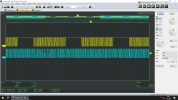
1.resimde B ve C fazları 30hz.
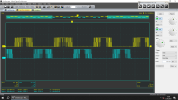
2.resimde A ve B fazı 30hz
1.sorum neden A fazı B ,C fazlarını dibi tam dolulukta olmuyor?

main.c ise ise şu şekilde kodlanmış;
void sineValuesGeneration(int freq){
nValues = 2*floor(9000/freq);
phaseB = 1*floor(nValues/3.00) + phaseA;
phaseC = 2*floor(nValues/3.00) + phaseA;
for(uint16_t i = 0; i < (nValues/2); i++){
sinValues = round(999.00*(0.5*m*sin(i*2*3.14159265358979323846/nValues)+0.5));
}
}
void HAL_TIM_PeriodElapsedCallback(TIM_HandleTypeDef *htim){

if((counter + phaseA)%nValues < (nValues/2)){
TIM1->CCR1 = sinValues[(counter + phaseA)];
}
else{
TIM1->CCR1 = 999-sinValues[(counter + phaseA)%(nValues/2)];
}
if((counter + phaseB)%nValues < (nValues/2)){
TIM1->CCR2 = sinValues[counter + phaseB];
}
else{
TIM1->CCR2 = 999-sinValues[(counter + phaseB)%(nValues/2)];
}
if((counter + phaseC)%nValues < (nValues/2)){
TIM1->CCR3 = sinValues[counter + phaseC];
}
else{
TIM1->CCR3 = 999-sinValues[(counter + phaseC)%(nValues/2)];
}
counter++;
if(counter > nValues) counter = 0;
}


arr 1000-1,prsecaler 8-1 dir.
 

Ekler
  • 1.png
    1.png
    120.9 KB · Görüntüleme: 28
  • 2.png
    2.png
    130.9 KB · Görüntüleme: 28
  • main.c
    main.c
    8 KB · Görüntüleme: 20
Son düzenleme:
Yardımcı olacak var mı?
ben tam olarak spwm tekniğini anlamadım.
9khz pwm üzerine kaç hz li ve kaç doluluklu sinyali koyacam?
 
Aşağıdaki kod parçası daha önce denediğim ve sorunsuz çalışan bir uygulamaya ait.
Yalnız burada yazılım kadar donanım da önemli. Devreyi nasıl kurdun ve asıl amaç nedir?

Mesela benim uygulalamam basit olduğu için ben 64 adımlı sinüs tablsou kullandım.


C++:
#include "pwm.h"

const uint32_t sinTable[64] = {
                                0,        660,   1320,  1980,  2639,  3298,  3955,  4611,
                                5266,  5919,  6570,  7219,  7867,  8511,  9153,  9793,
                                10429, 11062, 11692, 12318, 12941, 13559, 14174, 14784,
                                15389, 15990, 16586, 17177, 17763, 18343, 18918, 19487,
                                20050, 20607, 21158, 21702, 22239, 22770, 23294, 23811,
                                24321, 24823, 25317, 25804, 26283, 26754, 27217, 27672,
                                28118, 28555, 28984, 29404, 29815, 30217, 30610, 30993,
                                31368, 31732, 32087, 32432, 32767, 33092, 33407, 33712
                              };

uint32_t angleStep = 0, currentSector = 0, angleSector = 0, angleCircle = 0, angleIntegral = 0;
uint32_t angleStepBuffer, modIndexBuffer;
uint32_t modIndex = 0;
uint16_t pwmA = 0, pwmB = 0, pwmC = 0;

extern uint8_t calcFlag;

uint32_t freq = MIN_FREQ;
uint32_t magnitute = MIN_MAGNITUDE;
uint32_t ts = 2048;
uint32_t ta, tb, tz;


inline void svmUpdate()
{
    if(calcFlag == 0)
    {
        angleStep = angleStepBuffer;
        modIndex = modIndexBuffer;
    }

    angleIntegral += angleStep;
    angleCircle = ((angleIntegral >> 16) / 10);

    if(angleCircle >= 360)
    {
        angleCircle = angleCircle - 360;
        angleIntegral = (angleCircle << 16) * 10;
    }

    if(angleCircle > 0)
    {
        currentSector = angleCircle / 60;
    }
    else
    {
        currentSector = 0;
    }

    angleSector = angleCircle % 60;

    ta = sinTable[60 - angleSector];
    tb = sinTable[angleSector];

    ta = (ts * sinTable[60 - angleSector]) >> 15;
    ta = (ta * modIndex) >> 15;
    ta = ta / 100;

    tb = (ts * sinTable[angleSector]) >> 15;
    tb = (tb * modIndex) >> 15;
    tb = tb / 100;

    tz = ts - (ta + tb);
    tz = tz >> 1;

    switch(currentSector)
    {
        case 0:
        {
            pwmA = tz + ta + tb;
            pwmB = tz + tb;
            pwmC = tz;
            break;
        }

        case 1:
        {
            pwmA = tz + ta;
            pwmB = tz + ta + tb;
            pwmC = tz;
            break;
        }

        case 2:
        {
            pwmA = tz;
            pwmB = tz + ta + tb;
            pwmC = tz + tb;
            break;
        }

        case 3:
        {
            pwmA = tz;
            pwmB = tz + ta;
            pwmC = tz + ta + tb;
            break;
        }

        case 4:
        {
            pwmA = tz + tb;
            pwmB = tz;
            pwmC = tz + ta + tb;
            break;
        }

        case 5:
        {
            pwmA = tz + ta + tb;
            pwmB = tz;
            pwmC = tz + ta;
            break;
        }

    }

    TIM1->CCR1 = pwmA;
    TIM1->CCR2 = pwmB;
    TIM1->CCR3 = pwmC;
}
 
Aşağıdaki kod parçası daha önce denediğim ve sorunsuz çalışan bir uygulamaya ait.
Yalnız burada yazılım kadar donanım da önemli. Devreyi nasıl kurdun ve asıl amaç nedir?

Mesela benim uygulalamam basit olduğu için ben 64 adımlı sinüs tablsou kullandım.


C++:
#include "pwm.h"

const uint32_t sinTable[64] = {
                                0,        660,   1320,  1980,  2639,  3298,  3955,  4611,
                                5266,  5919,  6570,  7219,  7867,  8511,  9153,  9793,
                                10429, 11062, 11692, 12318, 12941, 13559, 14174, 14784,
                                15389, 15990, 16586, 17177, 17763, 18343, 18918, 19487,
                                20050, 20607, 21158, 21702, 22239, 22770, 23294, 23811,
                                24321, 24823, 25317, 25804, 26283, 26754, 27217, 27672,
                                28118, 28555, 28984, 29404, 29815, 30217, 30610, 30993,
                                31368, 31732, 32087, 32432, 32767, 33092, 33407, 33712
                              };

uint32_t angleStep = 0, currentSector = 0, angleSector = 0, angleCircle = 0, angleIntegral = 0;
uint32_t angleStepBuffer, modIndexBuffer;
uint32_t modIndex = 0;
uint16_t pwmA = 0, pwmB = 0, pwmC = 0;

extern uint8_t calcFlag;

uint32_t freq = MIN_FREQ;
uint32_t magnitute = MIN_MAGNITUDE;
uint32_t ts = 2048;
uint32_t ta, tb, tz;


inline void svmUpdate()
{
    if(calcFlag == 0)
    {
        angleStep = angleStepBuffer;
        modIndex = modIndexBuffer;
    }

    angleIntegral += angleStep;
    angleCircle = ((angleIntegral >> 16) / 10);

    if(angleCircle >= 360)
    {
        angleCircle = angleCircle - 360;
        angleIntegral = (angleCircle << 16) * 10;
    }

    if(angleCircle > 0)
    {
        currentSector = angleCircle / 60;
    }
    else
    {
        currentSector = 0;
    }

    angleSector = angleCircle % 60;

    ta = sinTable[60 - angleSector];
    tb = sinTable[angleSector];

    ta = (ts * sinTable[60 - angleSector]) >> 15;
    ta = (ta * modIndex) >> 15;
    ta = ta / 100;

    tb = (ts * sinTable[angleSector]) >> 15;
    tb = (tb * modIndex) >> 15;
    tb = tb / 100;

    tz = ts - (ta + tb);
    tz = tz >> 1;

    switch(currentSector)
    {
        case 0:
        {
            pwmA = tz + ta + tb;
            pwmB = tz + tb;
            pwmC = tz;
            break;
        }

        case 1:
        {
            pwmA = tz + ta;
            pwmB = tz + ta + tb;
            pwmC = tz;
            break;
        }

        case 2:
        {
            pwmA = tz;
            pwmB = tz + ta + tb;
            pwmC = tz + tb;
            break;
        }

        case 3:
        {
            pwmA = tz;
            pwmB = tz + ta;
            pwmC = tz + ta + tb;
            break;
        }

        case 4:
        {
            pwmA = tz + tb;
            pwmB = tz;
            pwmC = tz + ta + tb;
            break;
        }

        case 5:
        {
            pwmA = tz + ta + tb;
            pwmB = tz;
            pwmC = tz + ta;
            break;
        }

    }

    TIM1->CCR1 = pwmA;
    TIM1->CCR2 = pwmB;
    TIM1->CCR3 = pwmC;
}
sbt frekans anladığım kadarı ile
Ben vfd istiyorum
 
@ex_machina sadece kodun girişinden sonuna inio baktım sizin attığınız SVPWM, konuda istenen SPWM.

Konuda modülasyon ve kontrol tekniği karışıklığı var bence. Spwm bir modülasyon şekli, frekansı sabit değişken vs modülasyon üzerinde böyle oynamalar yapılabilir tabiki(pwm fazları kaydırılabilir, frekansı değiştirilebilir). Ama vfd istiyorum modülasyon üzerinden tek başına söylenecek bir şey değil.
 

Çevrimiçi personel

Forum istatistikleri

Konular
9,094
Mesajlar
146,746
Üyeler
3,684
Son üye
habaca

Son kaynaklar

Back
Top